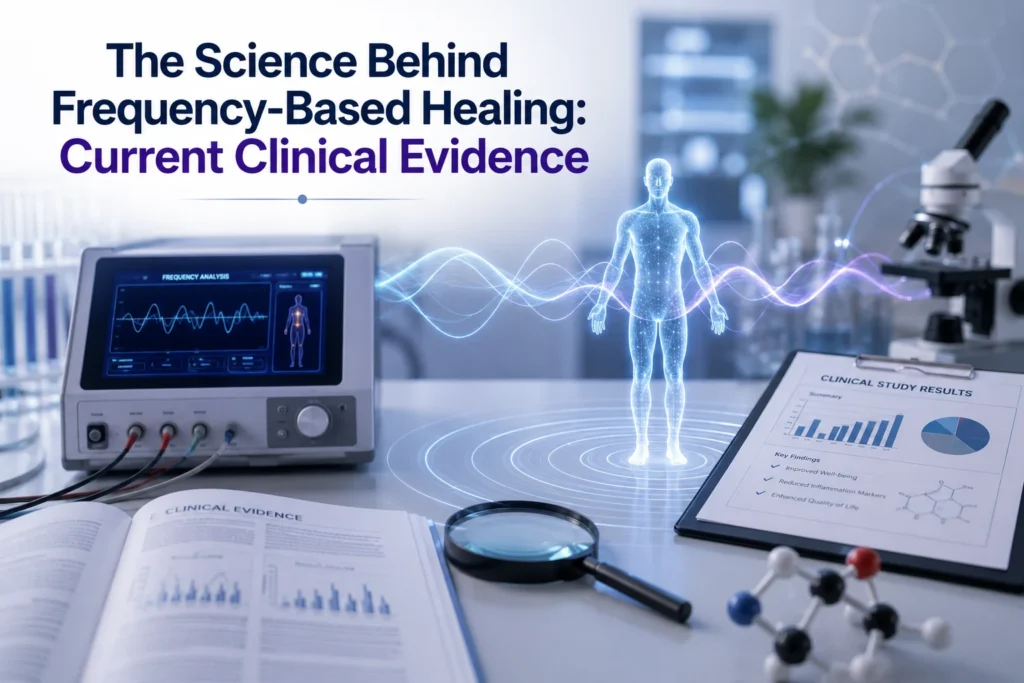
Frequency-based healing is a complementary wellness approach that uses sound, electromagnetic, or resonance frequencies to support the body’s natural balance. Current research shows promising results for stress reduction, relaxation, pain management, and nervous system regulation in some frequency-based therapies. However, more high-quality clinical studies are needed before broad medical claims can be made.
Key Takeaways
- Frequency-based healing is designed to complement, not replace, conventional medical care.
- Research is strongest for sound-based therapies, music therapy, and certain electromagnetic treatments.
- Clinical evidence for bioresonance is still emerging, with researchers calling for larger studies.
- Many people use frequency therapies to support relaxation, stress management, and overall well-being.
- Online bioresonance therapy has made personalized wellness sessions more accessible for people worldwide.
What Is Frequency-Based Healing?
Frequency-based healing is a holistic wellness approach that uses specific frequencies to encourage the body’s natural ability to maintain balance. These frequencies may be delivered through sound, electromagnetic fields, or specialized resonance technologies.
The concept is based on the understanding that the human body constantly produces electrical and electromagnetic signals. Cells, tissues, and organs communicate through complex biological processes that involve tiny electrical activities. Researchers continue to explore whether external frequencies can positively influence these natural communication systems.
Unlike conventional medical treatments that directly target diseases, frequency-based healing focuses on supporting relaxation, balance, and overall wellness.
How Does Frequency-Based Healing Work?
Many people ask whether the body truly responds to frequencies.
The answer is yes—but the mechanism depends on the type of therapy being used.
The nervous system, muscles, brain, and even the heart naturally generate electrical signals. Certain frequency-based therapies aim to interact with these biological systems by providing carefully selected frequencies that may encourage relaxation and healthy physiological responses.
Researchers believe these therapies may influence:
- Nervous system regulation
- Stress response
- Brain wave activity
- Muscle relaxation
- Cellular communication
- Overall mind-body balance
While scientists continue studying these mechanisms, the effects vary depending on the therapy and the individual.
What Does Current Clinical Research Say?
The scientific evidence surrounding frequency-based healing is growing, but not all therapies have the same level of research.
Some approaches have been studied extensively, while others require further investigation before firm conclusions can be drawn.
Current Evidence at a Glance
| Therapy | Current Clinical Evidence | Research Status |
| Sound frequency healing | Good evidence for relaxation, stress reduction, and emotional well-being | Well studied |
| Music therapy | Strong evidence for anxiety reduction in many healthcare settings | Strong |
| Pulsed Electromagnetic Field (PEMF) Therapy | Moderate evidence for certain pain and bone-healing applications | Moderate |
| Bioresonance therapy | Early and mixed findings with limited high-quality trials | Emerging |
This variation explains why healthcare professionals evaluate each therapy individually rather than treating all frequency-based approaches as equally supported by evidence.
Does Sound Frequency Healing Really Work?
Among complementary therapies, sound frequency healing has one of the strongest research foundations.
Clinical studies have investigated how therapeutic sounds, vibration, and music influence the brain and nervous system.
Researchers have observed potential benefits, including:
- Reduced stress
- Lower anxiety
- Improved sleep quality
- Better emotional regulation
- Increased relaxation
- Temporary pain relief in some individuals
Scientists suggest these effects may occur because calming sound frequencies help regulate the autonomic nervous system, reducing the body’s stress response and encouraging a relaxed state.
Although more research is ongoing, sound-based therapies are increasingly being integrated into wellness programs and supportive healthcare settings.
Is Bioresonance Therapy Scientifically Proven?
This is one of the most frequently searched questions.
Current evidence suggests that bioresonance therapy remains an emerging field of complementary wellness.
Some preliminary studies and patient reports have explored its use for stress management, fatigue, sleep concerns, allergies, and general wellness support. However, researchers also note that larger, well-designed clinical trials are needed before definitive conclusions can be reached.
For this reason, bioresonance is generally presented as a complementary wellness approach rather than a medically proven treatment for diseases.
Myth vs. Fact
Understanding what current research does—and does not—say is essential when exploring frequency-based healing.
| Myth | Fact |
| Frequency-based healing can cure any disease. | There is no reliable scientific evidence supporting cure-all claims. It is considered a complementary wellness practice. |
| All frequency therapies work the same way. | Different therapies, such as sound therapy, PEMF, and bioresonance, use different technologies and have varying levels of clinical evidence. |
| Scientific research does not exist. | Numerous studies have examined sound therapy, music therapy, and electromagnetic therapies, while research on bioresonance is still developing. |
| Frequency therapies should replace medical treatment. | They are intended to support overall wellness alongside professional medical care, not replace it. |
Can Online Bioresonance Therapy Be Effective?
Advances in digital technology have made online bioresonance therapy more accessible than ever. Instead of requiring frequent clinic visits, individuals can receive personalized wellness sessions from their homes.
Many people choose remote sessions because they offer:
- Greater convenience
- Flexible scheduling
- Ongoing wellness support regardless of location
- A comfortable home environment
- Easier access for busy professionals and individuals with limited mobility
Although the delivery method has evolved, online sessions should still be guided by qualified practitioners and viewed as part of a broader wellness routine rather than a substitute for medical care.
Who May Benefit from Frequency-Based Healing?
People often explore complementary therapies to support their overall well-being rather than treat a specific disease.
Some individuals report benefits such as:
- Feeling more relaxed
- Managing everyday stress more effectively
- Improving sleep quality
- Supporting emotional balance
- Enhancing focus and mental clarity
- Promoting a greater sense of overall wellness
Because every individual responds differently, results can vary. A healthy lifestyle, proper nutrition, regular physical activity, and appropriate medical care remain important foundations of long-term health.
Is Frequency-Based Healing Safe?
Most non-invasive frequency-based wellness approaches are generally considered low risk when delivered responsibly. However, they may not be suitable for everyone.
Before beginning any complementary therapy, consult a healthcare professional if you:
- Have a pacemaker or other implanted electronic medical device
- Are pregnant
- Have a serious medical condition
- Are you receiving treatment for a chronic illness
- Need emergency or urgent medical care
Using complementary therapies alongside evidence-based healthcare helps ensure a balanced and informed approach to wellness.
Expert Insight
Current scientific understanding suggests that frequency-based approaches may positively influence relaxation, stress management, and nervous system regulation in some individuals. At the same time, researchers agree that more large-scale, high-quality clinical trials are needed to better understand the effectiveness of bioresonance and other emerging frequency therapies.
For this reason, healthcare professionals generally recommend viewing these therapies as supportive wellness practices rather than standalone medical treatments.
Final Answer
Current evidence indicates that frequency-based healing shows the greatest promise in areas such as relaxation, stress reduction, emotional well-being, and certain pain management applications. Research supporting sound frequency healing is more established, while studies on bioresonance continue to evolve. When used responsibly alongside healthy lifestyle habits and professional medical care, complementary frequency-based therapies may help support overall wellness.
For individuals interested in exploring this holistic approach, DNA Resonance Care offers personalized wellness sessions designed to support balance, relaxation, and overall well-being through a responsible, complementary approach.
Frequently Asked Questions
1. Is frequency-based healing scientifically proven?
Some frequency-based therapies, such as sound and music therapy, have shown benefits for relaxation and stress management. Research on bioresonance is still developing, and more clinical studies are needed.
2. What is sound frequency healing?
Sound frequency healing uses therapeutic sound vibrations to promote relaxation, reduce stress, and support emotional well-being. It is commonly used as a complementary wellness practice.
3. Can online bioresonance therapy support wellness?
Online bioresonance therapy offers convenient access to personalized wellness sessions. It is designed to complement a healthy lifestyle and should not replace professional medical care.
4. Is frequency-based healing safe?
For most people, non-invasive frequency-based healing is considered low risk when provided responsibly. Individuals with serious medical conditions should consult a healthcare professional before starting any complementary therapy.