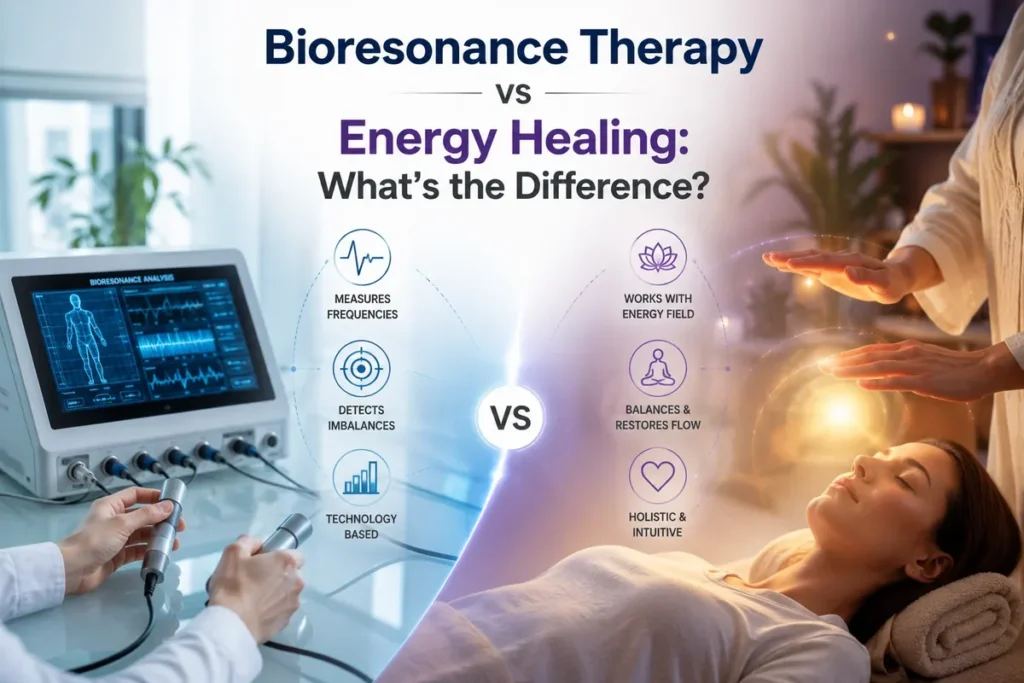
Bioresonance therapy is a complementary wellness approach that uses specialized devices to work with the body’s electromagnetic frequencies.
Energy healing focuses on balancing the body’s perceived energy field through practitioner-led techniques such as touch or intention.
While both support overall well-being, they work differently and should complement—not replace—medical care.
Key Takeaways
- Bioresonance therapy uses frequency-based technology, while energy healing does not.
- Both are complementary approaches that support overall wellness.
- Bioresonance treatment is device-assisted, whereas energy healing is practitioner-led.
- The right choice depends on your wellness goals and personal preferences.
- Neither therapy should replace evidence-based medical diagnosis or treatment.
Introduction
As interest in complementary wellness continues to grow, many people compare bioresonance therapy with energy healing. Although both aim to promote balance and well-being, they follow different methods. Knowing how each approach works can help you make an informed decision based on your personal wellness goals.
What Is Bioresonance Therapy?
Bioresonance therapy is a complementary wellness approach that uses electronic devices designed to interact with the body’s electromagnetic signals. Practitioners believe these signals may reflect how the body is functioning and use frequency-based technology to support the body’s natural self-regulation.
A typical session is non-invasive and usually lasts between 30 and 60 minutes. Many people include bioresonance treatment in their wellness routine alongside healthy habits such as balanced nutrition, regular exercise, quality sleep, and stress management.
People commonly choose bioresonance therapy to support:
- Relaxation
- Everyday stress management
- Overall wellness
- Healthy lifestyle goals
- Advanced holistic wellness programs
Research on bioresonance therapy is still developing, so it should be viewed as a complementary approach rather than a replacement for conventional medical treatment.
What Is Energy Healing?
Energy healing is a collection of wellness practices based on the idea that the body has a subtle energy field connected to physical, emotional, and mental well-being.
Unlike bioresonance therapy, energy healing does not use electronic equipment. Instead, practitioners use gentle touch, hands held above the body, breathing techniques, or focused intention to encourage relaxation and balance.
Common forms of energy healing include:
- Reiki
- Healing Touch
- Therapeutic Touch
- Pranic Healing
Many people seek energy healing to reduce stress, improve relaxation, and support emotional well-being. Like bioresonance therapy, it is considered a complementary practice.
Bioresonance Therapy vs Energy Healing: Key Differences
| Feature | Bioresonance Therapy | Energy Healing |
| Method | Frequency-based technology | Practitioner-led techniques |
| Equipment | Specialized electronic devices | No equipment required |
| Main Focus | Electromagnetic frequencies | Perceived energy field |
| Session Style | Device-assisted | Hands-on or hands-off |
| Wellness Goal | Support natural balance | Encourage relaxation and emotional well-being |
What Is the Biggest Difference?
The main difference is the approach. Bioresonance therapy uses technology to work with electromagnetic frequencies, while energy healing relies on practitioner-guided techniques. Both belong to the broader category of natural healing therapy, but they offer different experiences and may appeal to different individuals.
Which Therapy Is Right for You?
The best choice depends on your personal wellness goals, preferences, and expectations.
You may prefer bioresonance therapy if you:
- Want a technology-assisted wellness approach
- Prefer structured, device-based sessions
- Are interested in frequency-based complementary therapies
Energy healing may be a better option if you:
- Enjoy meditation or mindfulness practices
- Prefer practitioner-led sessions without equipment
- Want a calming experience focused on relaxation
Some people choose to include both approaches in their wellness routine. Before starting any complementary therapy, discuss your options with a qualified healthcare professional, especially if you have an existing medical condition.
Can Bioresonance Therapy and Energy Healing Be Used Together?
Yes. Many wellness practitioners believe both approaches can complement one another because they focus on different methods of supporting well-being.
For example, someone may use bioresonance treatment as part of a technology-assisted wellness program while also choosing energy healing to encourage relaxation and emotional balance. Combining complementary therapies with healthy lifestyle habits may support advanced holistic wellness, but they should not replace evidence-based medical care.
Conclusion
Both bioresonance therapy and energy healing aim to support overall well-being, but they use different techniques. Bioresonance therapy relies on specialized frequency-based technology, while energy healing focuses on practitioner-led methods to encourage balance and relaxation.
The right option depends on your personal preferences, wellness goals, and guidance from a healthcare professional. If you’re interested in exploring bioresonance therapy as part of a complementary wellness plan, DNA Resonance Care offers professional guidance to help you better understand this approach.
Frequently Asked Questions
1. What is the difference between bioresonance therapy and energy healing?
Bioresonance therapy uses frequency-based devices, while energy healing relies on practitioner-led techniques to support the body’s perceived energy field.
2. Is bioresonance therapy safe?
Bioresonance therapy is generally non-invasive. It should be used as a complementary wellness approach, not as a replacement for medical diagnosis or treatment.
3. Can I combine bioresonance therapy with energy healing?
Yes. Many people include both in their wellness routine because they use different approaches to support overall well-being.
4. How long does a bioresonance therapy session take?
Most sessions last 30 to 60 minutes, depending on the individual’s wellness goals and the practitioner’s approach.
5. Who can benefit from bioresonance therapy?
People looking for a complementary, technology-assisted wellness approach may choose bioresonance therapy alongside healthy lifestyle habits.
6. Is bioresonance therapy a natural healing therapy?
Yes. Bioresonance therapy is commonly described as a complementary natural healing therapy that aims to support the body’s overall wellness.