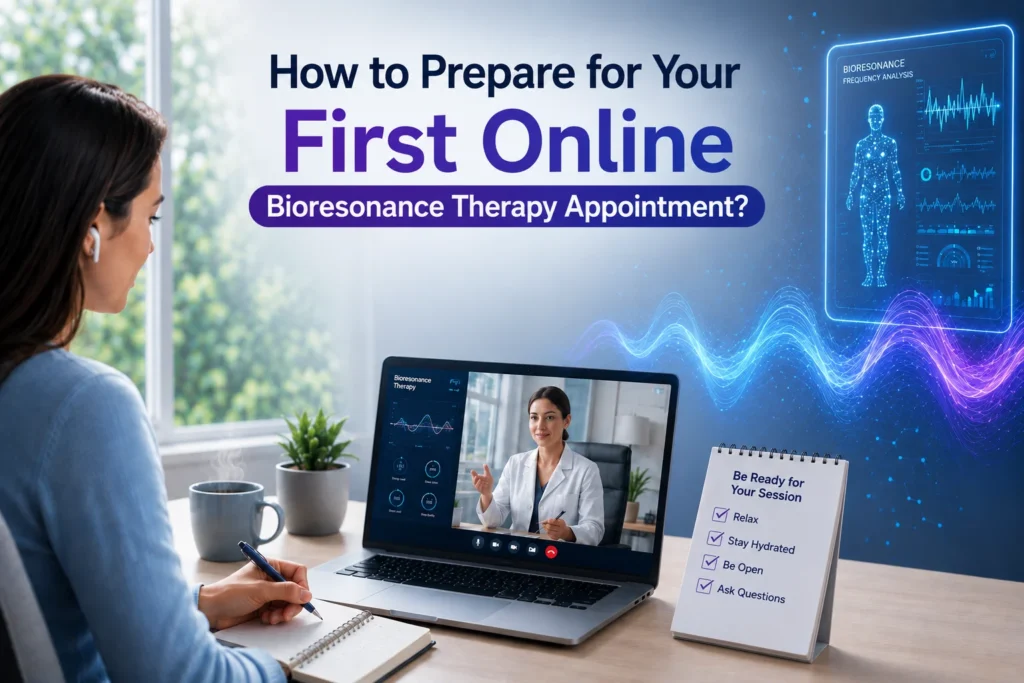
Your simple step-by-step guide to getting the most from your remote frequency balancing session
Booking your first online bioresonance therapy session can feel exciting and a little unknown. What do you need to send? How do you get ready? Will it feel different from an in-person visit?
This guide walks you through everything, using the same questions people ask most on Google. You’ll know exactly what to expect, how to prepare, and how to feel confident before your appointment with a practitioner like DNA Resonance Care.
What Is an Online Bioresonance Therapy Session?
Online or “distance” bioresonance is the same wellness approach used in clinics, just done remotely. Instead of sitting in front of the device, you send a small DNA sample — usually a few strands of hair with the follicle or a nail clipping. The practitioner places your sample in the machine at their office and runs the balancing programs while you’re at home.
People search for “remote bioresonance how does it work,” “bioresonance hair sample,” and “virtual frequency therapy session” because the idea is new to them. There’s no video call needed during the actual balancing. You can rest, work, or go about your day. Many clients say the convenience is the biggest benefit, especially if they live far from a clinic or have a sensitive child who prefers staying home.
What Do I Need to Send for My First Distance Bioresonance Appointment?
This is the top question: “What sample do I need for bioresonance?”
For most providers, including DNA Resonance Care, you’ll need:
- 3–5 strands of hair with the root/follicle attached – Pull gently from the brush or scalp. The follicle carries your DNA signature.
- OR a nail clipping from a finger or toe if hair isn’t possible.
- A small paper envelope – not plastic. Plastic can create static that interferes with the sample. Label it with your name and date of birth.
Don’t wash the hair or add sprays. Don’t send it in foil or a zip bag. Just clean, dry hair in a paper envelope works best. If you’re booking for your child, the same rules apply. One sample per person.
How Do I Book and What Happens Before the Session?
“How do I schedule bioresonance therapy online?” Booking is usually done through the clinic’s website. You’ll pick a date, pay for the session, and get an intake form by email.
The form is important. It asks about your main concerns, sleep, digestion, energy, stress, and any environmental factors you’ve noticed. Be honest and specific. The practitioner uses your notes plus the energetic scan of your sample to choose which programs to run.
Once your sample arrives, you’ll get a confirmation. Most clinics run the session within 1–3 business days and email you a report afterward. You don’t need to be on the phone or Zoom during the balancing unless you booked a consult to go over results.
How Should I Prepare on the Day of My Online Bioresonance Session?
“Do I need to do anything during a remote bioresonance session?” No. The work happens at the practitioner’s office. But clients often ask how to support the process, so here’s what helps:
- Hydrate well 24 hours before and after. Water helps your system process information. Aim for 6–8 glasses.
- Eat lightly if you can. A heavy meal right before isn’t necessary, but being overly hungry can be distracting.
- Avoid alcohol and recreational substances 12–24 hours prior. Practitioners say a clear system gives cleaner feedback.
- Set an intention. Some people like to rest, meditate, or journal for 20 minutes at their session time. It’s optional, but it helps you tune in to how you feel.
If you have a sensitive child, keep their day calm and predictable. No need to tell them “something is happening.” Just keep routines normal.
What Should I Expect After My First Distance Bioresonance Appointment?
“What do you feel after bioresonance therapy?” and “bioresonance side effects” are common searches. Because nothing physically touches you, most people feel nothing during the session itself.
Afterward, responses vary. Some people report feeling calmer, sleeping deeper that night, or having more mental clarity the next day. Others notice temporary thirst, tiredness, or emotional release over 24–48 hours. Practitioners describe this as your system integrating new information — similar to how you might feel after a massage, acupuncture, or starting a new supplement.
The key: it’s subtle. This isn’t a drug or instant fix. Think of it like tuning an instrument. Small adjustments, done consistently, add up. Drink water, rest if you feel tired, and note any changes in a simple journal.
How Will I Get My Results and What Will the Report Show?
“What is in a bioresonance report?” After your session, you’ll get a PDF by email. It usually includes:
- Priority imbalances found – categories like nutritional factors, environmental stressors, emotional patterns, or organ systems that showed stress frequencies.
- Programs run – the balancing frequencies the device delivered to your sample.
- Recommendations – lifestyle tips, hydration reminders, or areas to discuss with your doctor.
The report is not a medical diagnosis. It won’t say “you have X disease.” Instead, it’s an energetic snapshot. Many clients share it with their nutritionist, naturopath, or physician to explore further. If anything is unclear, book a follow-up call to walk through it.
How Many Sessions Will I Need and How Far Apart?
“How often should you do bioresonance therapy?” There’s no one-size rule. For first-time clients, many practitioners suggest 3–4 sessions spaced 1–2 weeks apart. This builds momentum. After that, people move to monthly or quarterly maintenance, depending on goals.
If you’re using it for general wellness, seasonal changes, or stress, you might book around life events — travel, school terms, job changes. If you’re supporting a specific concern, your practitioner will suggest a plan and review it as you go.
Can Kids and Sensitive People Do Online Bioresonance?
“Is distance bioresonance safe for children?” and “bioresonance for anxiety” show up a lot. Yes, kids can do distance sessions, and many parents prefer it because there’s no clinic visit, no electrodes, and no need for the child to sit still.
For highly sensitive individuals, the non-invasive nature is a big plus. Still, always keep your primary healthcare provider in the loop. Bioresonance is complementary. It doesn’t replace medical care, therapy, or prescribed treatments.
Your First Session, Made Simple
Your first online bioresonance appointment is easier than most people expect. Send the sample, fill the form, stay hydrated, and keep an open mind. The technology handles the rest, and you get the report without leaving home.
The real value comes from consistency and context. Track how you feel, combine insights with healthy habits, and work with your wider care team. That’s how complementary wellness fits into real life.