
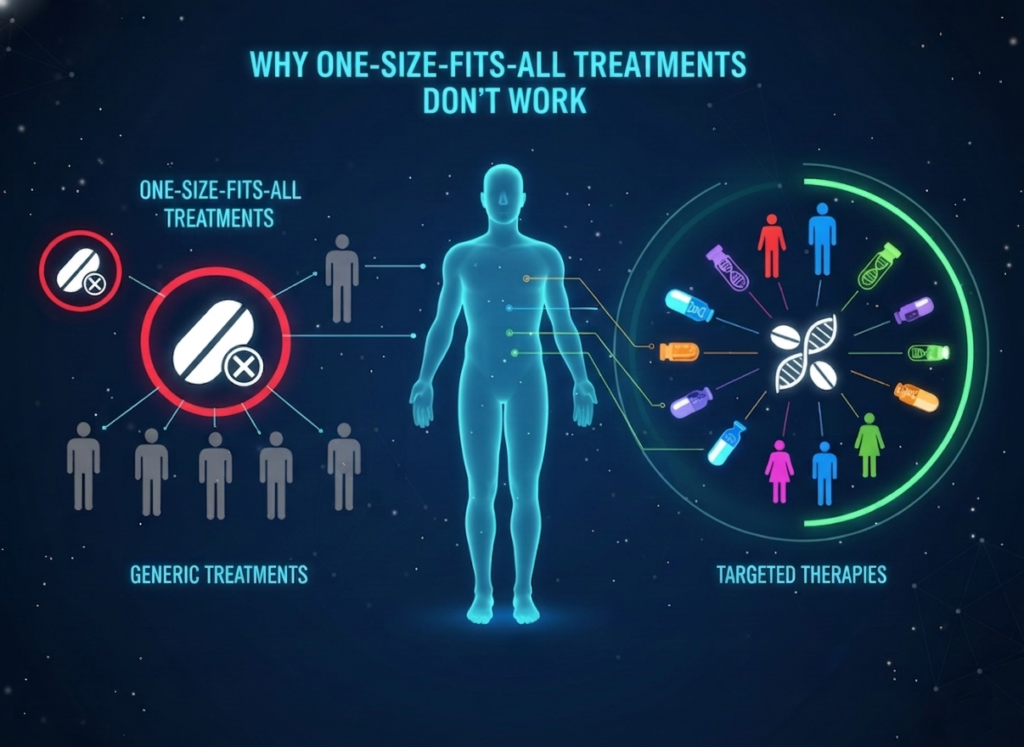
For decades, healthcare systems around the world have largely relied on standardized treatments—protocols designed to work for the majority of patients. While this approach has been effective in many situations, it often overlooks one critical factor: every human body is unique.
No two individuals share the exact same biology, lifestyle, environment, or health history. As a result, treatments that work well for one person may not deliver the same results for another. This realization has led to a major shift in modern healthcare—toward personalized medicine.
Personalized medicine focuses on tailoring healthcare to the individual, rather than applying a uniform approach to everyone. It represents a more precise, thoughtful, and effective way of understanding and supporting human health.
The Problem with One-Size-Fits-All Treatments
Traditional healthcare approaches are based on generalized research and average responses. While this helps establish broad treatment guidelines, it does not account for the natural variations between individuals.
Why Standard Treatments Fall Short
- Biological Differences Each person has a unique genetic makeup, which influences how their body processes nutrients, responds to medications, and handles stress.
- Different Lifestyles Diet, activity levels, sleep patterns, and daily habits vary widely from person to person, affecting overall health and treatment outcomes.
- Environmental Exposure Factors such as pollution, climate, and exposure to toxins can differ significantly, influencing how the body functions.
- Unique Health Histories Past illnesses, medications, and life experiences all shape an individual’s current health status.
Because of these differences, a standardized treatment may only address symptoms temporarily or may not be fully effective for everyone.
Understanding Biological Uniqueness
At the core of personalized medicine is the understanding that each individual is biologically distinct. This uniqueness is influenced by several factors:
Genetic Makeup
Your DNA determines how your body functions at a fundamental level. It influences metabolism, immunity, and how your body responds to various internal and external factors.
Genetic Expression
While genes provide the blueprint, how they are expressed depends on lifestyle and environmental influences. This means that two people with similar genetic tendencies may experience very different health outcomes.
Cellular Communication
The body operates through constant communication between cells and systems. When this communication is efficient, the body functions smoothly. When disrupted, it can lead to imbalances and health concerns.
What is Personalized Medicine?
Personalized medicine is an approach that considers individual differences in biology, environment, and lifestyle to create customized health strategies.
Rather than asking, “What works for most people?”, it asks:
“What works best for this individual?”
This approach may involve:
- Understanding genetic and cellular patterns
- Identifying specific imbalances in the body
- Designing tailored therapy or wellness plans
- Continuously adapting based on progress
How Personalized Medicine Works
The process of personalized medicine typically involves several key steps:
1. Comprehensive Assessment
The journey begins with gathering detailed information about the individual’s health, lifestyle, and biological signals.
2. Identifying Root Causes
Instead of focusing only on symptoms, personalized approaches aim to uncover underlying imbalances.
3. Customized Plan Creation
A therapy or wellness plan is designed specifically for the individual, taking into account their unique needs.
4. Monitoring and Adjustment
As the body responds, the plan is adjusted to ensure optimal results over time.
Benefits of Personalized Medicine
Personalized medicine offers several important advantages over traditional approaches:
1. More Effective Results
Because treatments are tailored to the individual, they are more likely to produce meaningful and lasting outcomes.
2. Targeted Approach
It focuses on specific needs rather than applying general solutions, improving precision and efficiency.
3. Early Identification of Imbalances
Subtle changes in the body can be detected early, allowing for proactive care.
4. Reduced Trial and Error
Standard treatments often involve trying multiple options before finding what works. Personalized approaches reduce this uncertainty.
5. Holistic Care
It considers the whole person—physical, emotional, and environmental factors—rather than isolated symptoms.
The Role of Lifestyle in Personalized Medicine
While personalized therapies provide valuable insights and direction, lifestyle choices remain a crucial part of the process.
Nutrition
A balanced diet supports cellular function and overall health. Personalized recommendations can help address individual nutritional needs.
Physical Activity
Movement improves circulation, metabolism, and energy levels, contributing to better health outcomes.
Sleep
Quality sleep is essential for repair and recovery. Personalized strategies can help improve sleep patterns.
Stress Management
Managing stress is vital for maintaining balance within the body. Techniques such as mindfulness, relaxation, and proper rest can support overall wellbeing.
Personalized Medicine in Everyday Health
Personalized medicine is not limited to complex medical conditions. It can also play a role in everyday health and wellness.
Improving Energy Levels
By understanding individual metabolic patterns, personalized approaches can help address fatigue and low energy.
Supporting Immune Function
Tailored strategies can strengthen the body’s natural defense systems.
Enhancing Mental Wellbeing
Recognizing the connection between physical and emotional health allows for more balanced care.
Preventive Health
Personalized insights enable individuals to take proactive steps before issues develop into more serious conditions.
Why the Shift Toward Personalization is Growing
The rise of personalized medicine is driven by several factors:
- Advancements in science and technology
- Increased awareness of individual health differences
- Demand for more effective and sustainable solutions
- A growing focus on preventive care
People are no longer satisfied with temporary fixes. They are seeking deeper understanding and long-term solutions that align with their unique needs.
Challenges and Considerations
While personalized medicine offers many benefits, it is important to approach it thoughtfully.
- It requires careful assessment and expertise
- Results may take time and consistency
- It works best when combined with healthy lifestyle choices
Understanding these factors helps set realistic expectations and ensures a more effective experience.
The Future of Healthcare
Personalized medicine represents the future of healthcare—one that moves beyond generalized treatment and embraces individuality.
As research continues to evolve, we can expect more precise tools, better insights, and increasingly effective approaches to health and wellness.
This shift is not just about improving treatment—it’s about redefining how we understand health itself.
Conclusion
One-size-fits-all treatments have served an important role in healthcare, but they are no longer enough in a world where individuality matters more than ever.
Personalized medicine recognizes that every person is unique, with their own biological patterns, lifestyle influences, and health needs. By tailoring approaches to the individual, it offers a more effective, targeted, and sustainable path to wellbeing.
Your health is not average—and your care shouldn’t be either. By embracing personalized medicine, you can move toward a deeper understanding of your body and a more balanced, healthier life.